Mars, our neighbor world
 Amid the excitement of the Apollo 11 Moon
landing, another revelatory mission was gathering data about Mars.
A pair of spacecraft, Mariners 6 and 7, obtained closeups of selected
regions and lower resolution views of the entire planet as they
approached. This is the first color spacecraft photograph ever
made of Mars, taken by Mariner 7 in late July 1969. 244K
Amid the excitement of the Apollo 11 Moon
landing, another revelatory mission was gathering data about Mars.
A pair of spacecraft, Mariners 6 and 7, obtained closeups of selected
regions and lower resolution views of the entire planet as they
approached. This is the first color spacecraft photograph ever
made of Mars, taken by Mariner 7 in late July 1969. 244K
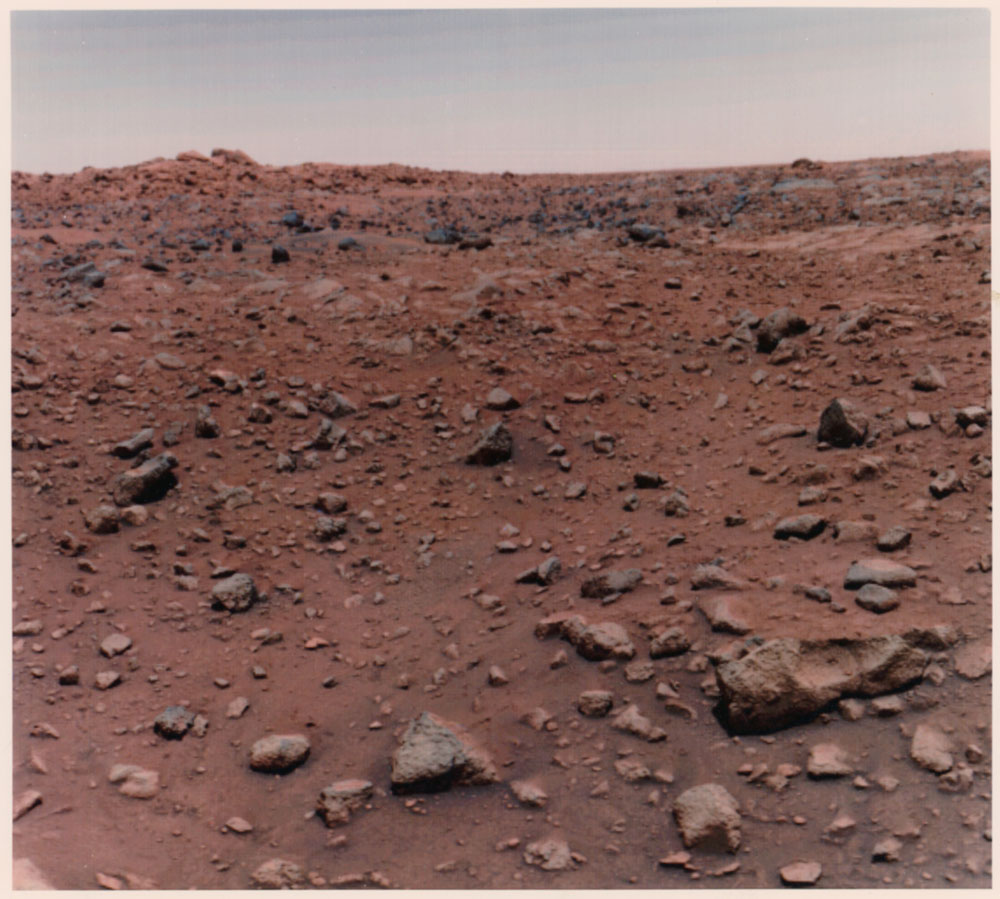
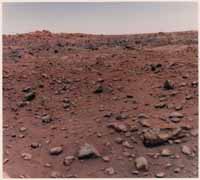 The original version of the first color photo
returned from the surface of Mars. In this first release the Viking
imaging team intended to balance the sky color a neutral gray.
The color balance somehow shifted towards the blue during the
preparation of the photographic prints and the result was a surprisingly
Earthlike Mars, widely reproduced in news magazines and television.
While superseded by later more accurate work, this was the first
impression many had of what our neighbor world looked like on
the ground. A few people continue to circulate claims that Mars
really looks like this, generally with conspiratorial overtones.
180K
The original version of the first color photo
returned from the surface of Mars. In this first release the Viking
imaging team intended to balance the sky color a neutral gray.
The color balance somehow shifted towards the blue during the
preparation of the photographic prints and the result was a surprisingly
Earthlike Mars, widely reproduced in news magazines and television.
While superseded by later more accurate work, this was the first
impression many had of what our neighbor world looked like on
the ground. A few people continue to circulate claims that Mars
really looks like this, generally with conspiratorial overtones.
180K
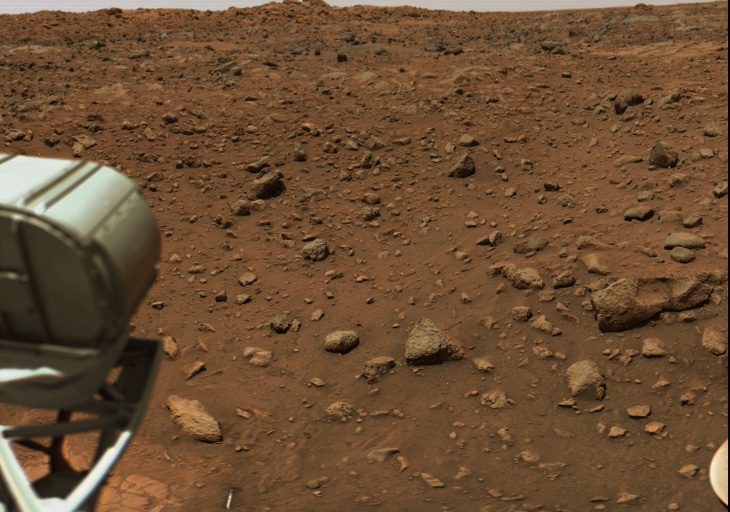
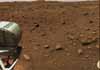 A later color image of a similar
scene, with more of the lower field of view revealed. Note the
lighter 'subsoil' layer exposed by the lander descent engine at
the lower left. The overall neutral gray paint on the Viking lander
and the dull 'brass' like color of the soil sampler housing assist
in determining a reasonable color balance. 192K
A later color image of a similar
scene, with more of the lower field of view revealed. Note the
lighter 'subsoil' layer exposed by the lander descent engine at
the lower left. The overall neutral gray paint on the Viking lander
and the dull 'brass' like color of the soil sampler housing assist
in determining a reasonable color balance. 192K
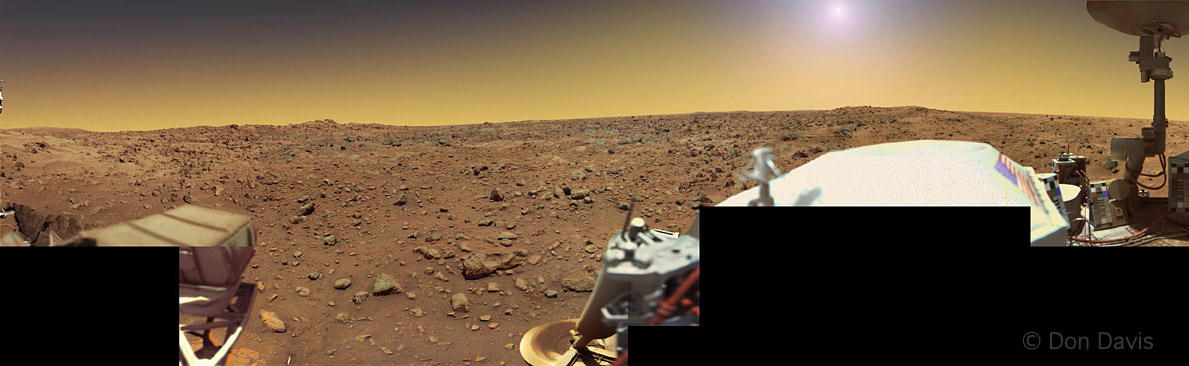
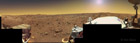 Viking 1 returned color images of its rocky surroundings
in sections over time. Here is a composite of the camera 2 color
images made with similar lighting conditions, with an artistically
added sky. 128K.
Viking 1 returned color images of its rocky surroundings
in sections over time. Here is a composite of the camera 2 color
images made with similar lighting conditions, with an artistically
added sky. 128K.
 This Viking 2 panorama was assembled from two images
taken on somewhat different times of day. The tilt of the spacecraft
is partially corrected by use of 'shear' filter in Photoshop.
In retrospact, despite great effort using visual and radar data
of the landing sites available at the time, both landers ended
up among the rockiest places on the planet! 772K
This Viking 2 panorama was assembled from two images
taken on somewhat different times of day. The tilt of the spacecraft
is partially corrected by use of 'shear' filter in Photoshop.
In retrospact, despite great effort using visual and radar data
of the landing sites available at the time, both landers ended
up among the rockiest places on the planet! 772K
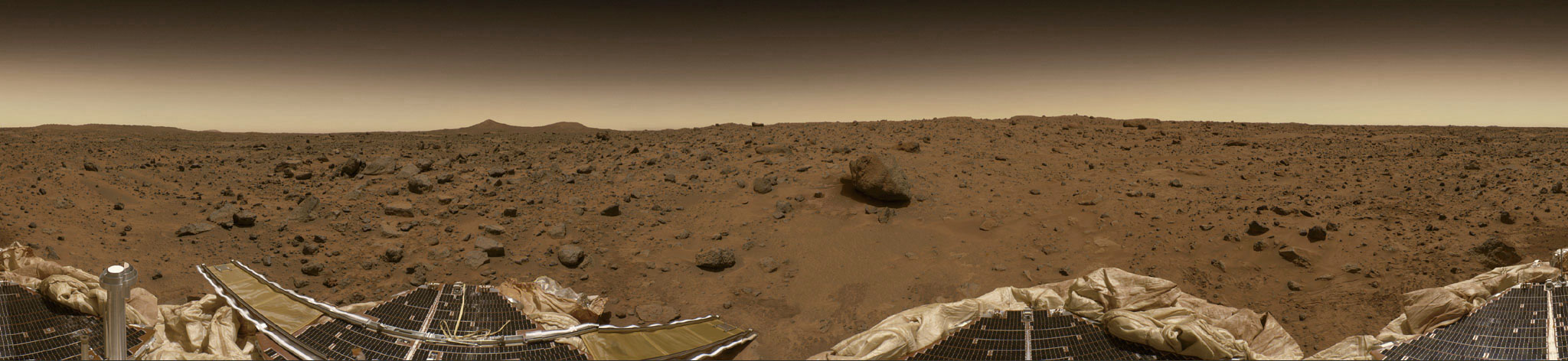
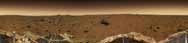 Pathfinder's panorama, shown here with some effort
to show something resembling the true colors of the scenery and
sky. This was done as a background to an animation so the Rover
has not driven to the large rock 'Yogi' yet! The pre rover deployment
panorama was used to 'fill in' the ground later marked up by the
little rover. 248K
Pathfinder's panorama, shown here with some effort
to show something resembling the true colors of the scenery and
sky. This was done as a background to an animation so the Rover
has not driven to the large rock 'Yogi' yet! The pre rover deployment
panorama was used to 'fill in' the ground later marked up by the
little rover. 248K
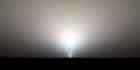 On
April 30 the MER-B rover ('Opportunity') obtained color images
of the sunset with the L4, 5, and 6 filters which when combined
provide an image with reasonable color fidelity. The preliminary
JPEG images used, including the green (L5) filtered image, can
be seen
here. They captured half the inner twilight glow, with the
right edge of the frame just catching the setting Sun. I first
registered the Sun, which moved between the exposures, and the
inner glows to the green image and obtained a plausable looking
match in all 3 colors. I then 'mirrored' the frame and placed
it so the Sun was a circle partially revealed from both sides.
I then artistically 'filled in' the narrow middle strip of missing
data. 96K
On
April 30 the MER-B rover ('Opportunity') obtained color images
of the sunset with the L4, 5, and 6 filters which when combined
provide an image with reasonable color fidelity. The preliminary
JPEG images used, including the green (L5) filtered image, can
be seen
here. They captured half the inner twilight glow, with the
right edge of the frame just catching the setting Sun. I first
registered the Sun, which moved between the exposures, and the
inner glows to the green image and obtained a plausable looking
match in all 3 colors. I then 'mirrored' the frame and placed
it so the Sun was a circle partially revealed from both sides.
I then artistically 'filled in' the narrow middle strip of missing
data. 96K
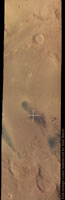
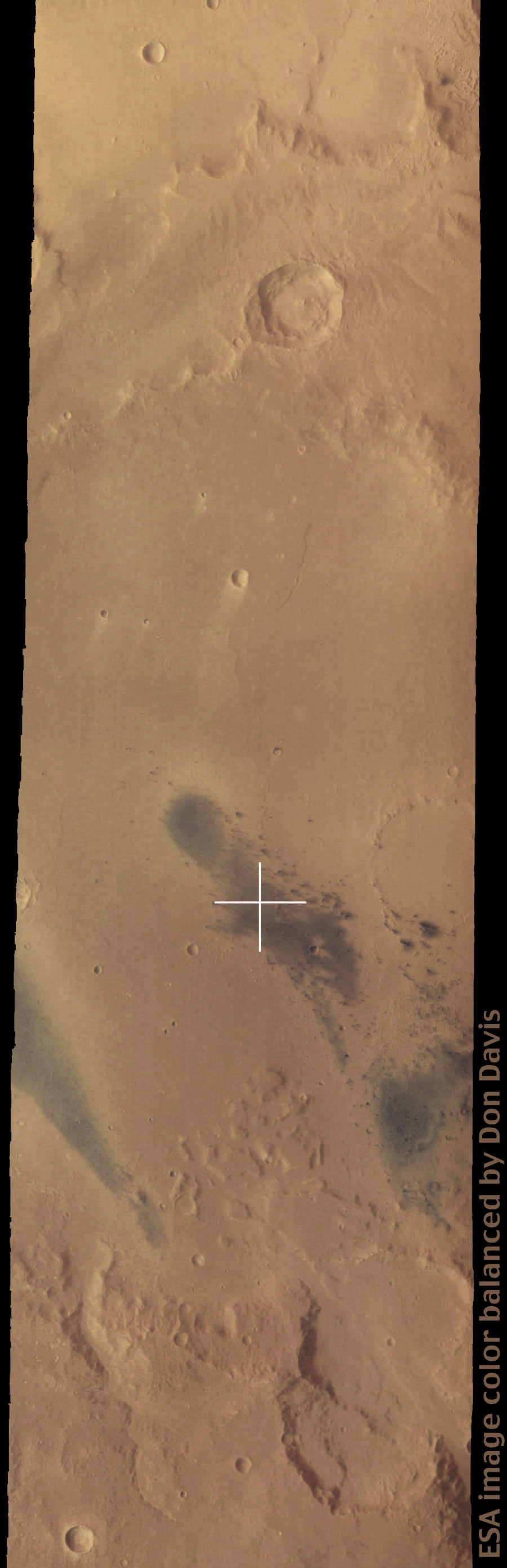
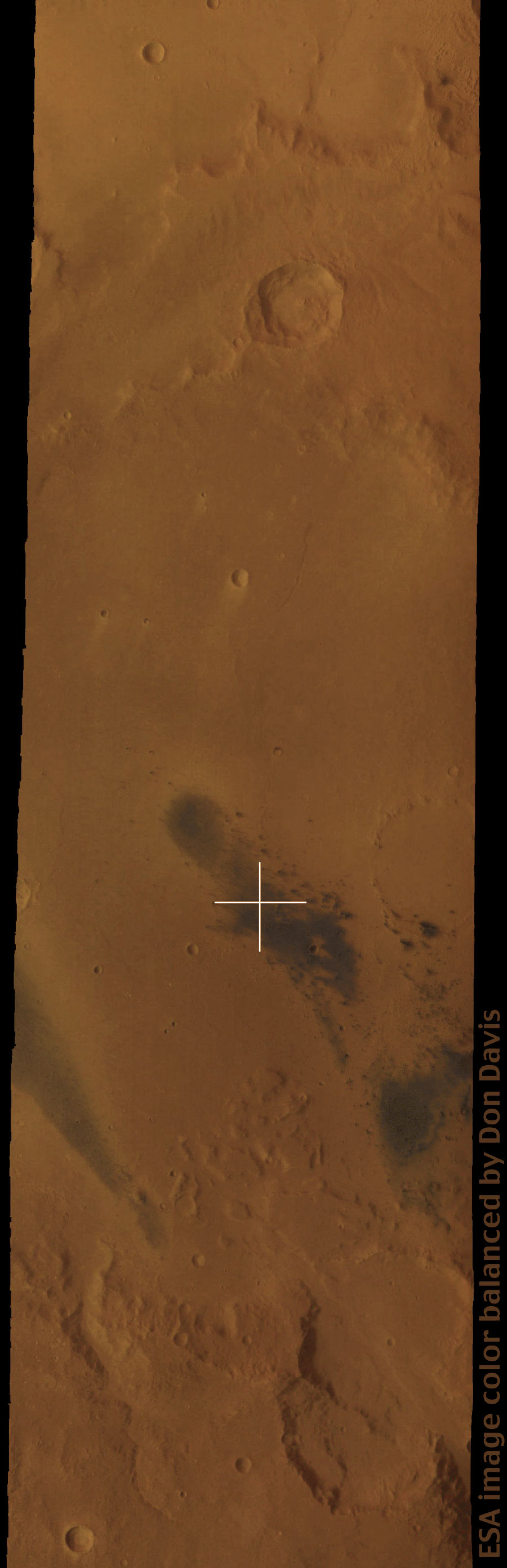
The European Space Agency 'Mars Express' spacecraft
carries a high quality multispectral camera which has returned
many excellent color Mars images. This color image of the Gusev
landing site region as been adjusted from the garish original
release seen here.
to more closely match the probable colors, in the overexposed
fashion one might see through a super telescope or visually from
orbit. The dark regions which appear blue or even green in some
images are exposed dark gray basaltic rock, which when particularly
free of dust often appears a dark neutral gray. Another newer
version of a color balance resembling the 'ground view' of the
colors of the surface seen by the 'Spirit' rover can be seen here. 252K
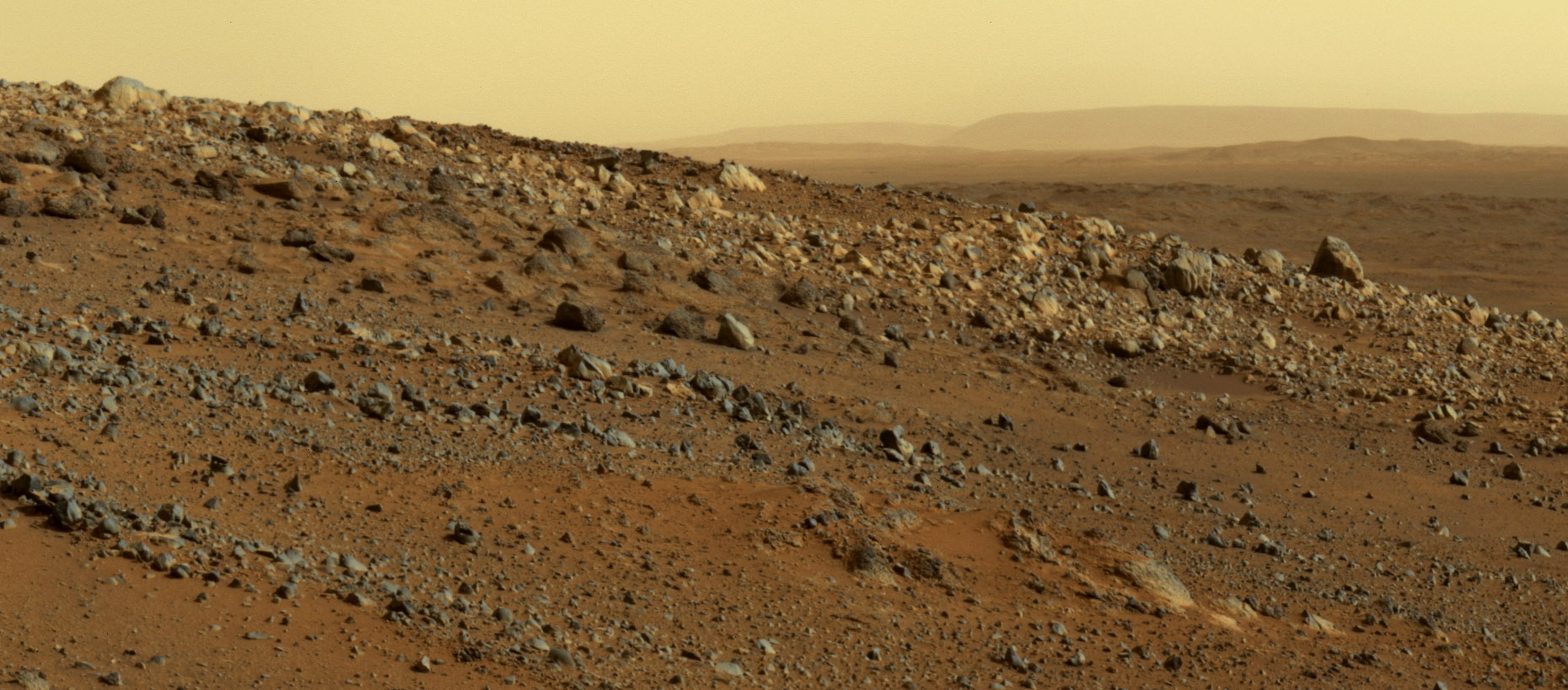
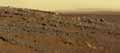 The Gusev landing site has proven to be a fantastic
place to visit, rewarding the longevity of the rover with varieties
of scebery. Here we see an attempt at a 'true color' scene with
minor contribution from the ambient lighting from the skies, reworked
from a color calibrated mosaic by Daniel Crofty. There are three
different sets of rocks with different colors or with different
dust adhesion characteristics. 380K
The Gusev landing site has proven to be a fantastic
place to visit, rewarding the longevity of the rover with varieties
of scebery. Here we see an attempt at a 'true color' scene with
minor contribution from the ambient lighting from the skies, reworked
from a color calibrated mosaic by Daniel Crofty. There are three
different sets of rocks with different colors or with different
dust adhesion characteristics. 380K
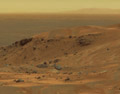
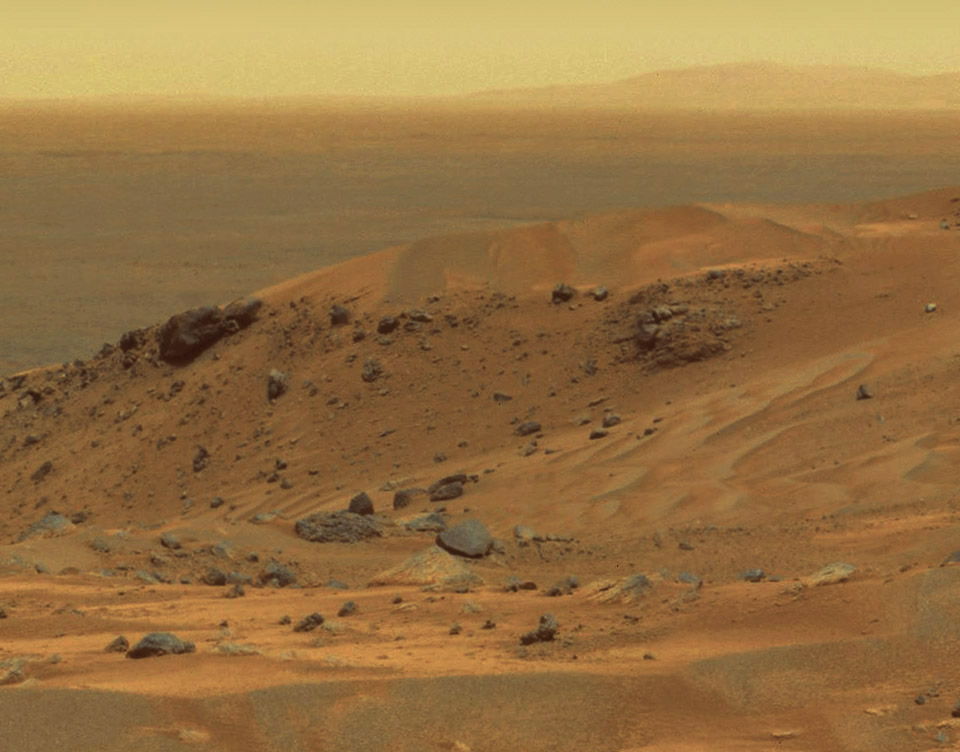
On Sol 582 at the Gusev landing site this beautiful
overview was obtained by the Spirit rover. The bright dust forms
smooth dunes nearby, with medium brown and dark gray soil and
rocks visible. This version suggests the effects of noticable
ambient lighting from the sky in relatively dusty conditions.
Reworked from a color calibrated mosaic by Daniel Crofty. 140K
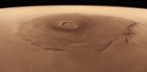
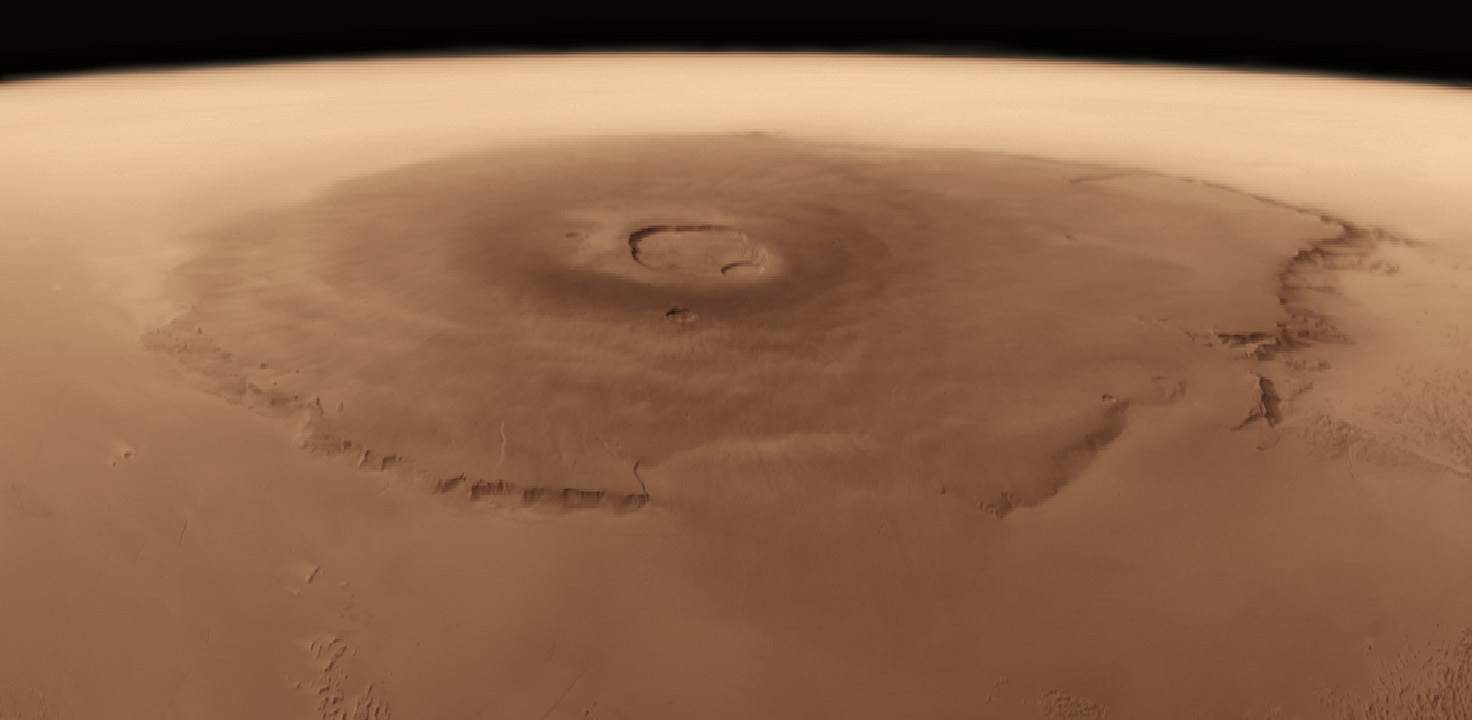
This oblique view of Olympus Mons was altered
by 'bending' the image to suggest the curvature of the horizon
of Mars, and the gray scale image was 'colorised' to roughly approximate
natural color. 124K
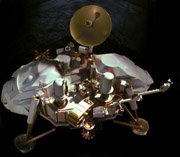
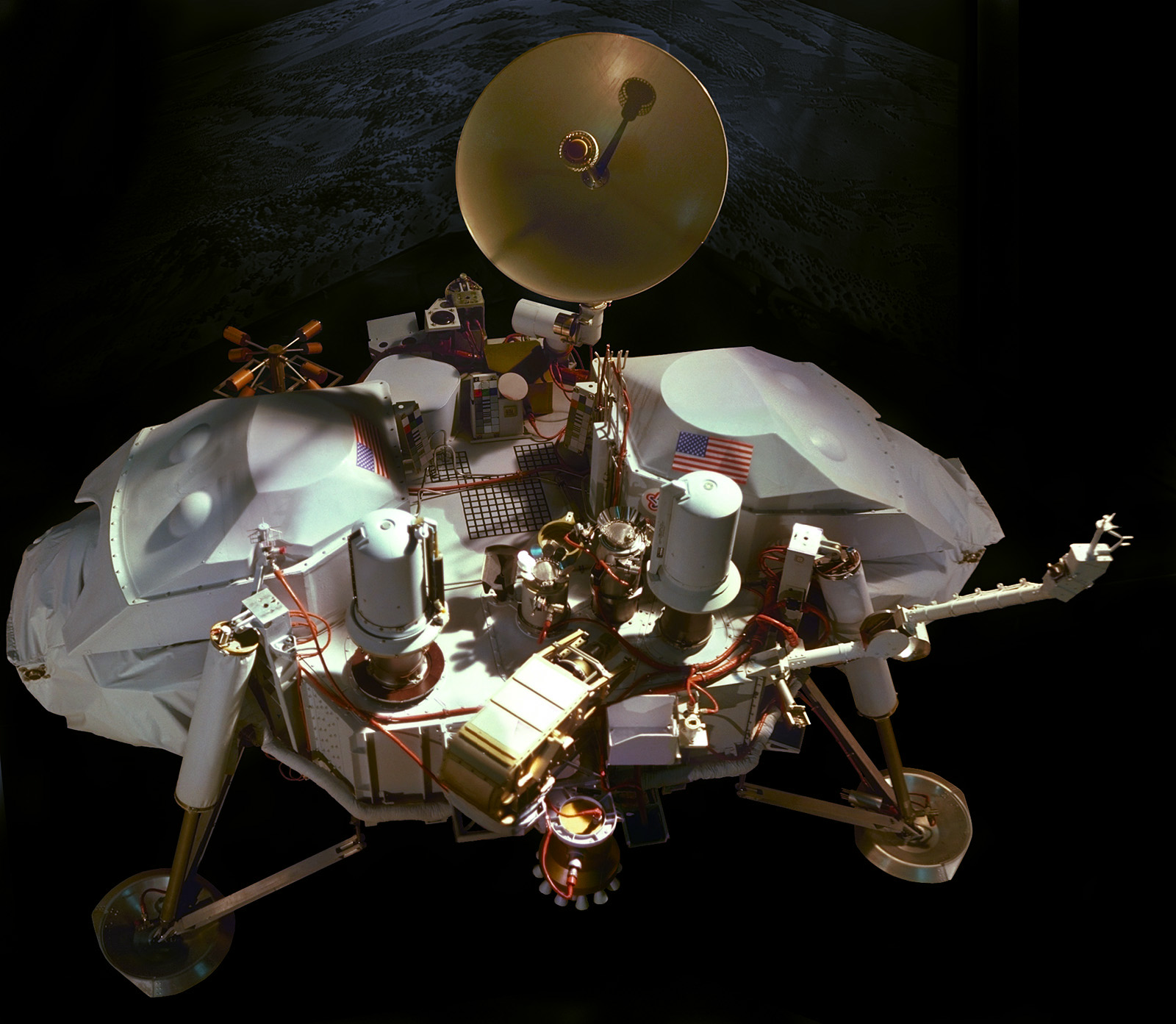
The Viking landers were replicated by a high
fidelity copy called the Science Test Lander. I shot this mosaic
of slides from the top of a ladder in 1976 and recently made a
mosaic from the scanned slides. 424K.

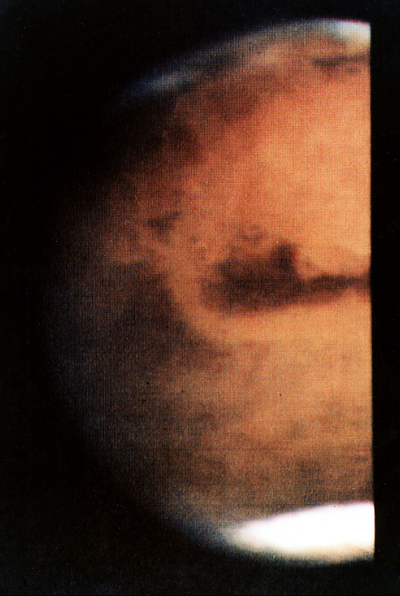 Amid the excitement of the Apollo 11 Moon
landing, another revelatory mission was gathering data about Mars.
A pair of spacecraft, Mariners 6 and 7, obtained closeups of selected
regions and lower resolution views of the entire planet as they
approached. This is the first color spacecraft photograph ever
made of Mars, taken by Mariner 7 in late July 1969. 244K
Amid the excitement of the Apollo 11 Moon
landing, another revelatory mission was gathering data about Mars.
A pair of spacecraft, Mariners 6 and 7, obtained closeups of selected
regions and lower resolution views of the entire planet as they
approached. This is the first color spacecraft photograph ever
made of Mars, taken by Mariner 7 in late July 1969. 244K